Rammed earth · Timber · Glass
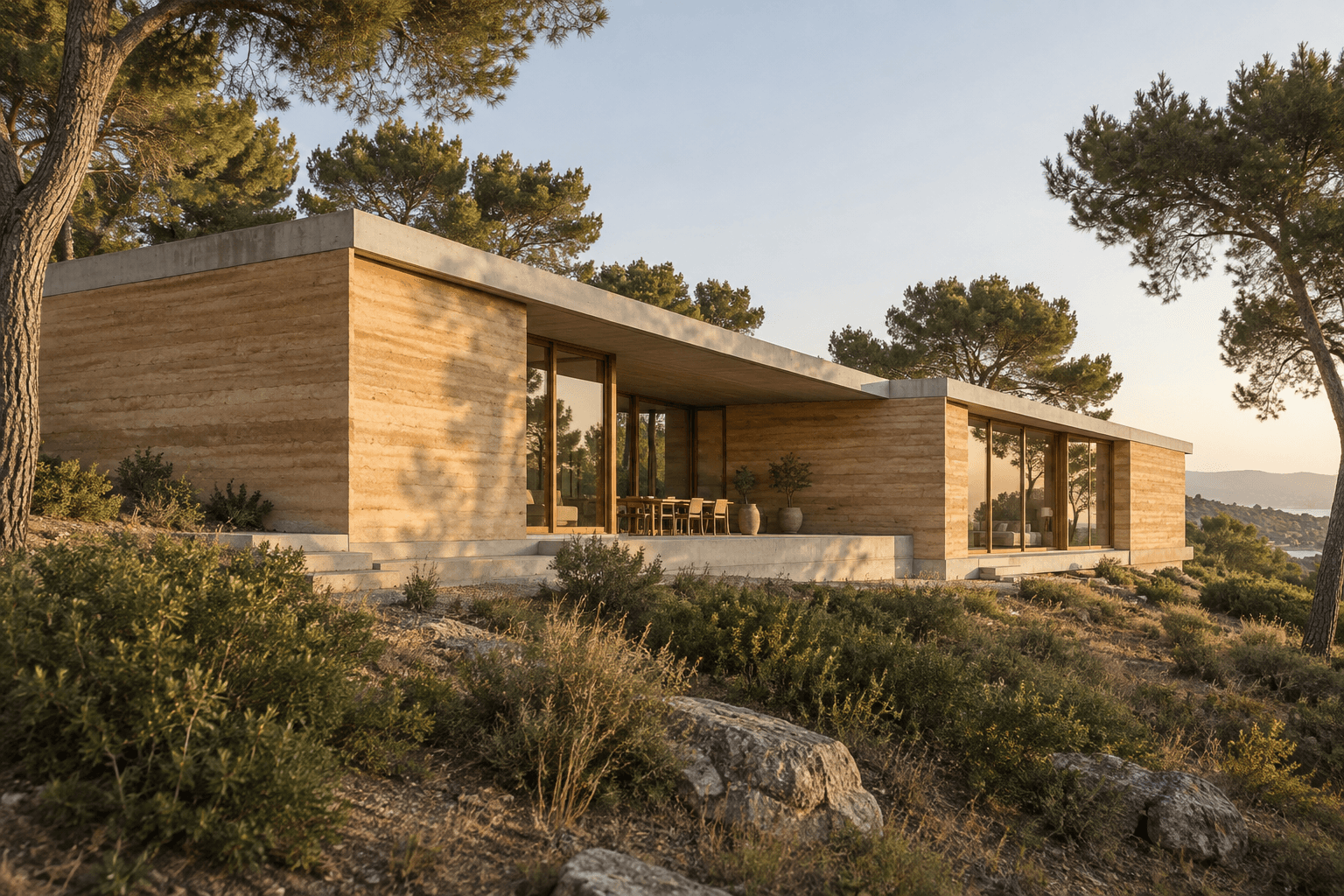
Earthen walls establish a grounded edge against the hillside.
The house begins with the difference between looking across a landscape and standing within it. Its arrangement follows that distinction, giving the uphill edge a more enclosed character and opening the shared spaces toward the view. The slope is treated as a reason to vary the relationship between ground and room, rather than as a flat platform to be imposed. This creates a sequence with both orientation and a sense of shelter.
Rammed earth brings a visible horizontal grain to the project. The bands within its surface give the walls a scale that can be read from a distance and a texture that rewards a closer view. Openings are considered against this weight, with their proportions defining where the enclosure becomes generous and where it remains reserved. The material is not a background finish; it is central to the building’s spatial identity.

Oak and rammed earth bring warmth behind the glass.
The view is most useful when there is somewhere comfortable from which to experience it. Instead of making every edge equally transparent, the design alternates solid wall with clear openings. A person can sit close to the heavier enclosure while looking outward through glass. This balance gives the living spaces a quieter character and allows a room to hold its own presence alongside the larger scale of the hillside.
Timber softens the earthen surfaces at the points of closer contact, while glass introduces a different kind of depth. The palette stays limited so the relationship between these materials remains easy to understand. Their junctions are developed with the same restraint as the massing: a clear edge, a considered recess, a change in texture. The aim is a house whose details reinforce the initial idea rather than introduce a separate decorative theme.
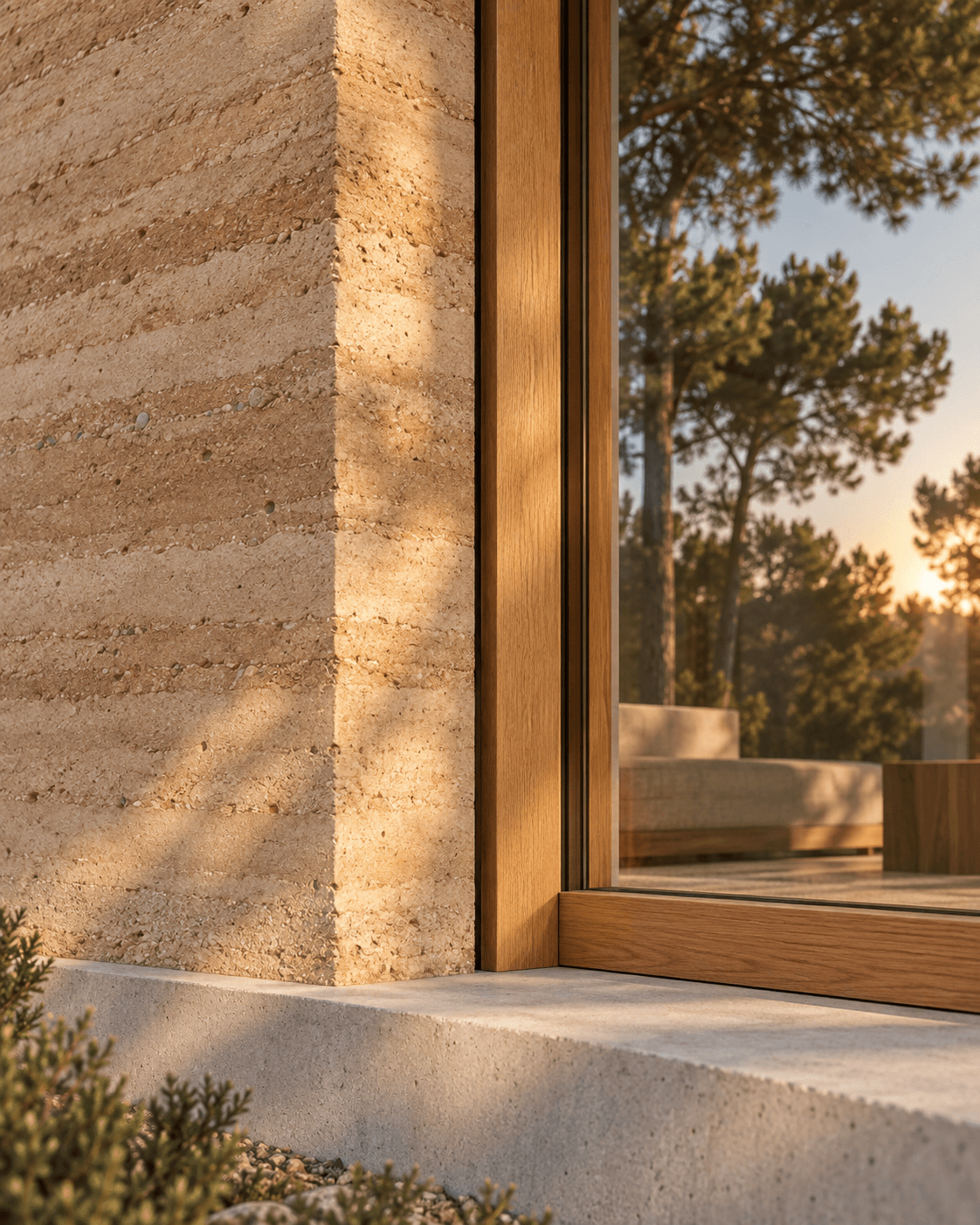
The recessed oak frame reveals the depth of the earthen wall.

A concrete canopy shelters the terrace beside the pines.
Beyond its outward view, the house is concerned with the slower experience of inhabiting a room. The depth of a wall, the direction of an opening and the warmth of a timber surface help define where to settle. The studies explore these qualities together, using the hillside as a continuous reference. Architecture gives the landscape a frame, but also gives daily life somewhere protected and specific within it.